

Why Digital Marketing Isn’t as Lucrative as It Used to Be (And What You Need to Learn Instead)
Digital marketing salaries and freelance rates have flattened since 2021, even as the number of people calling themselves “digital marketers” has multiplied several times over. The reason isn’t that marketing stopped working. It’s that the bar for what counts as a marketer quietly moved — and most people haven’t moved with it.
Five or six years ago, a person who could run a Facebook ad campaign and post consistently on Instagram could genuinely call themselves a digital marketer and get paid well for it. That window has closed. Clients today expect one person or one agency to move fluidly between web design, technical SEO, paid media, and analytics — and now AI has collapsed the time it takes to produce the actual assets, which means the marketer’s value has shifted almost entirely to judgment, strategy, and execution speed.
This piece breaks down exactly what changed, why “just knowing social media” no longer pays the bills, and the specific skill stack that separates marketers who are thriving in 2026 from the ones wondering where the good clients went. If you want the condensed version as a step-by-step plan, we’ve also laid it out in our 2026 digital marketing roadmap.
The Golden Era of Digital Marketing Is Over
Between roughly 2014 and 2020, digital marketing had a low barrier to entry and comparatively little competition. A small business owner who had never run a Facebook ad in their life was easy to impress. Posting three times a week and boosting a post occasionally looked like expertise. Agencies and freelancers built entire careers on one narrow skill — community management, or basic Google Ads, or Instagram growth — because the market hadn’t caught up yet.
That gap is gone. Every business, from a local clinic to a global brand, now has some baseline digital presence and has usually already been burned by at least one “digital marketer” who overpromised and underdelivered. Clients have gotten more educated, more skeptical, and more demanding, all at the same time.
What Actually Changed
1. AI collapsed production timelines from weeks to minutes
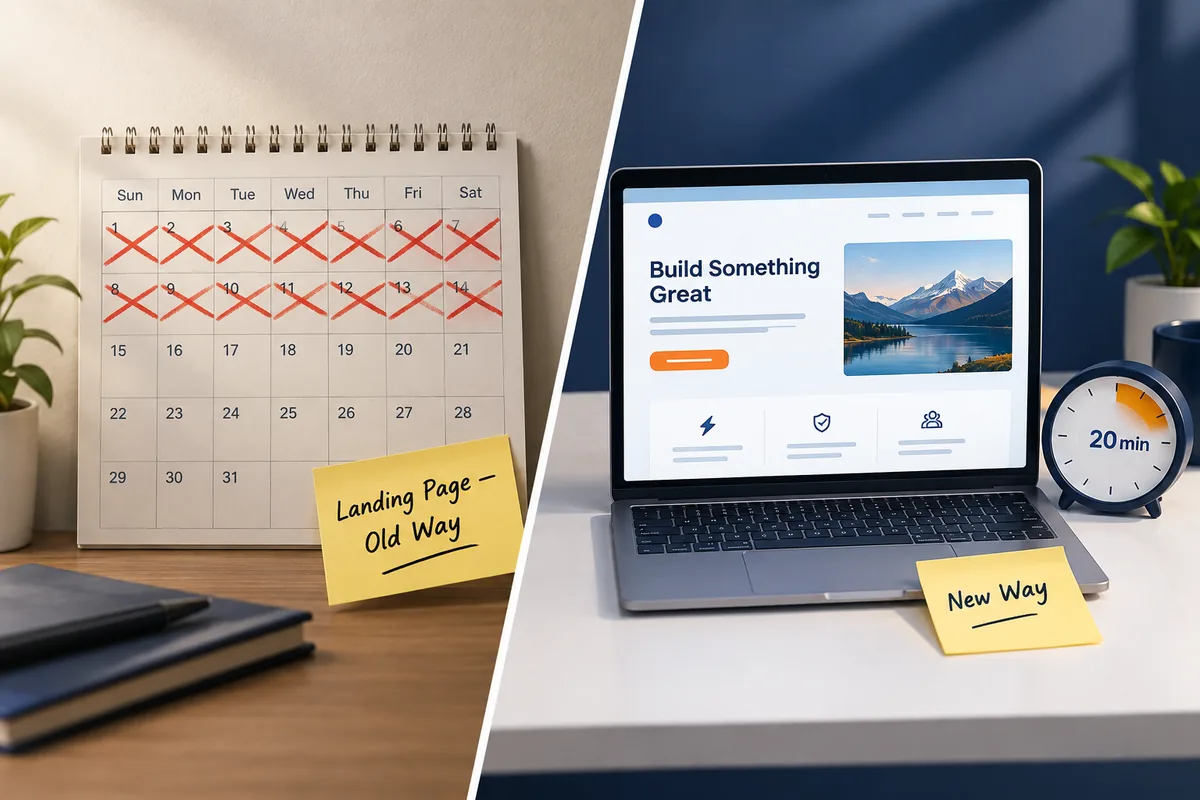
This is the single biggest shift, and it’s very recent. A few years ago, a marketer who wanted a new landing page had to brief a designer, wait for a developer, and hope the copy came back on time — a process that easily took one to two weeks. Today, a landing page, a set of ad creatives, and three variations of ad copy can be generated inside a single afternoon using AI tools. Execution is no longer the bottleneck it used to be, and generalist marketers who only knew how to “manage” that process, without being able to touch the tools or the code themselves, have lost the one thing that made them useful. Knowing how to actually direct these tools — through structured, specific prompts — is quickly becoming its own core skill; we’ve broken down how that works in our guides to what prompting actually is and prompt engineering for marketers.
2. The tools got democratized
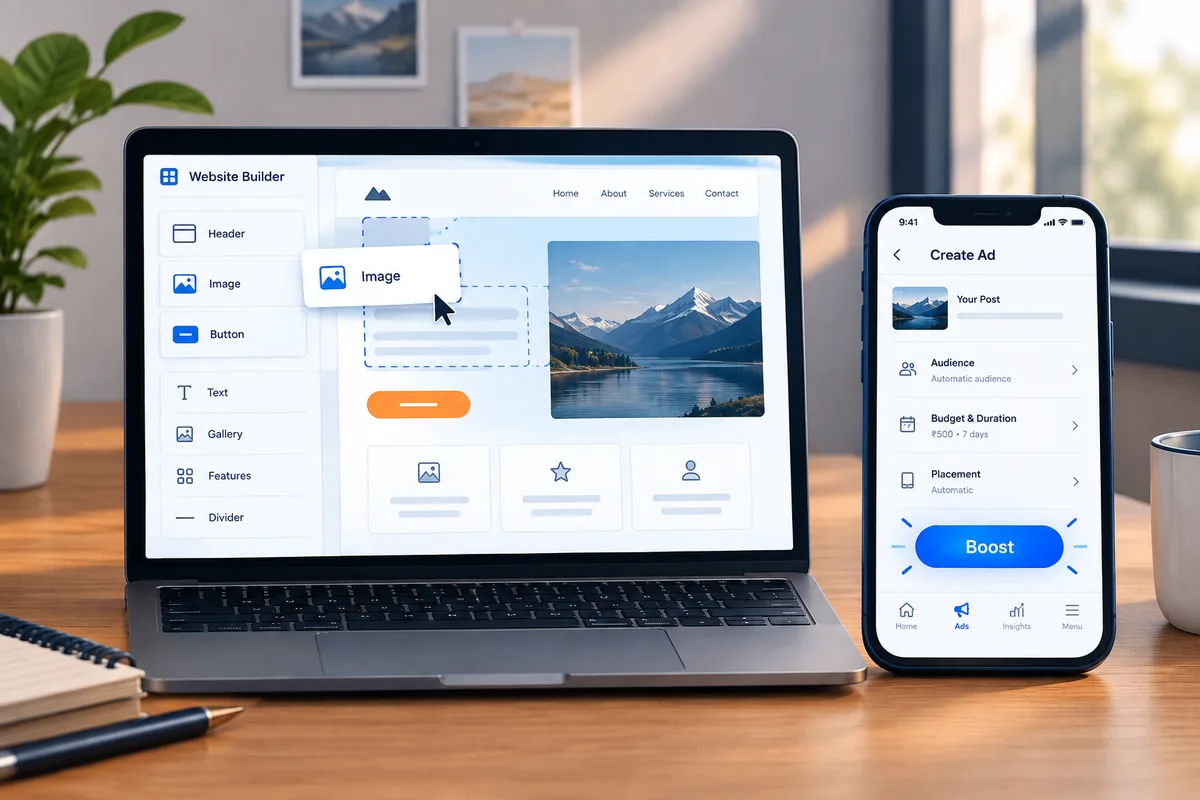
Website builders, AI writing tools, and drag-and-drop ad managers have collapsed tasks that used to require a specialist into something a business owner can attempt themselves in an afternoon. That pushed the value of “basic execution” toward zero and pushed the value of strategy, integration, and technical depth upward — see our full rundown of the AI SEO tools reshaping this in 2026.
3. Search itself changed shape
Search engines now generate AI-written summaries directly on the results page, and a growing share of queries never result in a click at all. Ranking a page in the traditional sense is no longer sufficient — marketers now need to understand Generative Engine Optimization (GEO) and how it differs from and complements Answer Engine Optimization (AEO), structuring content so that AI systems can extract, cite, and recommend it. We’ve also covered how to write content that AI tools actually quote.
4. Ad platforms got more automated, not simpler

Google Ads and Meta Ads have shifted heavily toward machine-learning-driven bidding. That sounds like it needs less skill, but it actually needs more — because the marketer’s job moved from manually adjusting bids to feeding the algorithm the right signals, structuring accounts correctly, and diagnosing why automated campaigns underperform. Our complete guide to Google Ads search campaigns and breakdown of Meta Pixel vs. Conversions API cover exactly why this is now a technical discipline, not a “boost the post” job.
5. Client budgets are scrutinized harder
Marketing budgets across most industries are held to tighter ROI expectations than they were in the low-interest-rate years. A marketer who can’t tie their work to a measurable number gets cut first when budgets shrink — which is exactly why we wrote a plain breakdown of CPL vs. CPA vs. ROAS and which one actually grows a business.
6. Supply exploded
Every year, more people enter digital marketing through short courses and certifications, many of them teaching the same surface-level social media and basic-ads curriculum. Supply of generalist marketers has grown far faster than demand for generalist marketing — a big part of why so many graduates struggle to find jobs even after finishing a degree or a course.
The One-Skill Marketer Is Now the Riskiest Career Bet
If your entire value proposition is “I manage Instagram and Facebook pages,” you are now competing against thousands of people offering the same thing at falling prices, plus AI tools that can draft captions, generate creatives, and even assemble a landing page on their own. That’s not a controversial opinion anymore — it’s what’s showing up in freelance marketplace rates and in how clients brief agencies.
The marketers who are still commanding strong retainers and salaries in 2026 share one trait: they can move across the entire funnel instead of owning one slice of it, and they can use AI tools to execute fast without losing strategic control of the outcome. They don’t need a designer, a developer, and an ads specialist standing behind them for every small task — they can do enough of each themselves, often with AI doing the heavy lifting, to see the whole picture and make it work together. We go deeper on this shift in why the SEO and marketing role is evolving faster than ever.
The Full-Stack Marketer: What You Actually Need to Learn
None of this means becoming a world-class expert in ten different fields. It means having working, hands-on competence across the following areas, so you can execute independently — using AI to speed up production — and speak intelligently to specialists when you need to bring one in.
Web design and basic HTML
You don’t need to be a front-end engineer, but you need to understand how a landing page is structured, why load speed and mobile responsiveness affect conversions, and how to make small HTML/CSS edits without waiting on a developer for every button color change.
WordPress (or another CMS) fluency
The majority of small and mid-sized business websites still run on WordPress. Knowing how to build and edit pages, manage plugins, and troubleshoot basic issues turns you from someone who “makes recommendations” into someone who ships work.
SEO, AEO, and GEO together
Traditional keyword-and-backlink SEO is still relevant, but it’s now only one layer. Our complete on-page SEO guide and our breakdown of how SEO actually works in the AI era (GEO, AEO, AIO) are good starting points for building this layer properly.
Social media marketing — as one channel, not the whole job
Social still matters for brand and community, but it needs to be positioned as a spoke, not the hub, of a marketing strategy.
Google Ads
Understanding account structure, conversion tracking, and how to work with (not against) automated bidding strategies is now table stakes. Track the numbers that actually matter using our complete list of Google Ads metrics every business must track.
Meta Ads
Beyond boosting posts: pixel setup, Conversions API, campaign structuring, and creative testing at a level that actually moves cost-per-result. If your campaigns are already live and underperforming, our Meta Ads troubleshooting guide is a useful diagnostic starting point.
Native advertising
Platforms like Taboola and Outbrain operate on very different creative and bidding logic than social or search ads. Marketers who understand what native ads are and know their way around the major native ad platforms unlock budget and audiences that pure social-and-search specialists never touch.
Mobile performance marketing
App install campaigns, mobile measurement, and event-based optimization are a distinct discipline from web performance marketing, and increasingly essential as more client spend shifts to app-first businesses — a trend covered in our broader look at why Indian businesses increasingly need a dedicated performance marketing partner.
How to Actually Upskill Without Burning Out
Trying to learn all of this at once is a fast route to giving up. A more realistic approach:
- Audit your current skill stack honestly. Write down what you can do without help versus what you currently outsource or avoid.
- Pick one adjacent skill at a time. If you already know social media, learn Meta Ads properly next — it’s the shortest bridge.
- Learn to direct AI tools, not just consume their output. The marketers pulling ahead right now are the ones who can prompt precisely enough to get a usable landing page or ad set on the first or second try, not the tenth.
- Learn by doing, not just by watching. Run a small real campaign, build a real landing page — even for your own portfolio — rather than only consuming course content.
- Learn the “why,” not just the “how.” Platforms and AI tools change their interfaces constantly; understanding the underlying logic (attribution, bidding, on-page structure) keeps your skills useful even when the buttons move.
- Get feedback from someone already doing it professionally. A structured mentorship or apprenticeship compresses years of trial and error into months — see our full digital marketing roadmap for 2026 for a sequenced version of this path.
This is also exactly why we built our own mentorship track at Harmukh Technologies around this full-stack approach, rather than teaching social media or ads in isolation — because that’s what the market is actually paying for now, not what it was paying for in 2018.
The Bottom Line
Digital marketing isn’t dying, and it isn’t even shrinking — it’s consolidating around people who can do more of the funnel themselves, faster, with AI handling the grunt work. The marketers and agencies who treated social media, SEO, or ads as their entire identity are the ones feeling the squeeze. The ones building a genuinely full-stack skill set — web, content, SEO/AEO/GEO, and paid media across search, social, native, and mobile, all sped up by AI rather than replaced by it — are the ones still getting paid what the work is actually worth.
Frequently Asked Questions
Is digital marketing still a good career in 2026?
Yes, but the version that pays well looks different than it did a few years ago. Generalist, single-channel marketers face falling rates, while marketers with cross-functional skills across web, SEO/AEO/GEO, and paid media across multiple platforms — plus the ability to direct AI tools effectively — remain in strong demand.
Do I need to learn to code to be a good digital marketer?
Not full software development, but basic HTML/CSS and WordPress fluency go a long way. They let you ship changes yourself instead of being bottlenecked by a developer for routine work.
What is GEO in digital marketing?
Generative Engine Optimization (GEO) is the practice of structuring content so AI systems — like AI Overviews and chatbots — can extract, cite, and recommend it directly to users, alongside traditional SEO.
Has AI made digital marketers less necessary?
No — it’s made generalist, execution-only marketers less necessary. AI has removed the wait time for landing pages, creatives, and ad copy, but someone still has to set the strategy, structure the campaigns, and judge whether the AI’s output actually converts.
Should I specialize or generalize as a digital marketer?
Both, in sequence. Build broad, working competence across web, SEO, and paid media first, then go deep on the one or two areas where you show the strongest results or interest.