
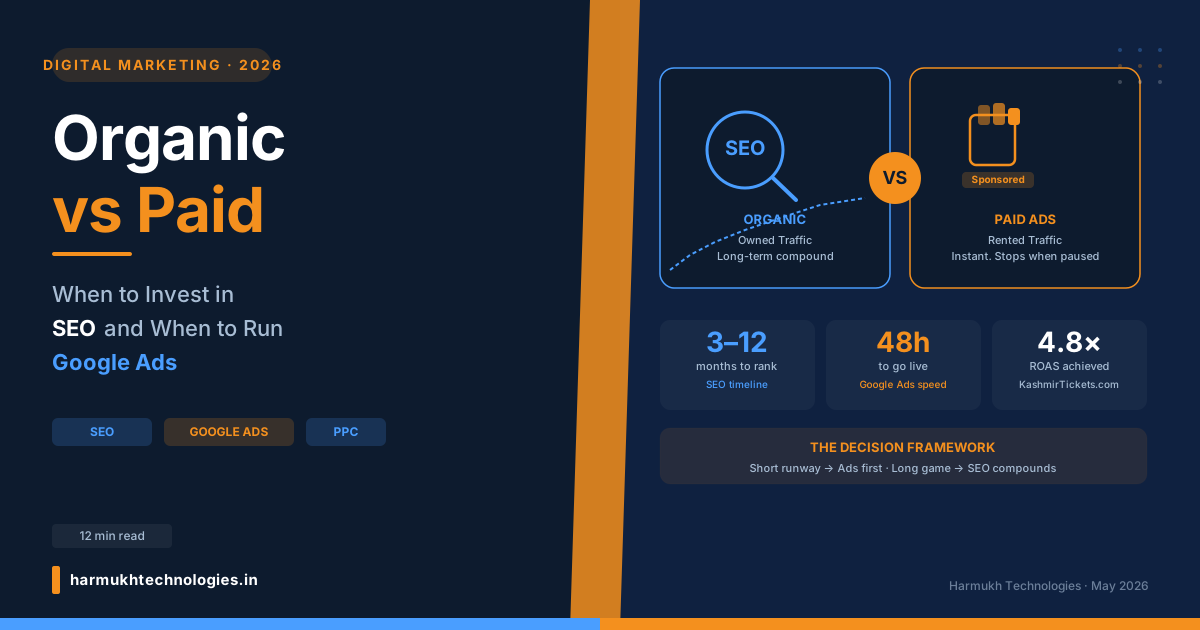
The question isn’t which channel is better. It’s which one your business needs right now and how to run both without wasting money on either.
Every business owner eventually asks the same question: SEO or Google Ads? And almost everyone frames it wrong. It’s not a choice between two marketing channels. It’s a choice between two entirely different relationships with your audience one you rent, one you own. Get the timing wrong and you’ll either bleed cash on ads that stop the moment you pause, or wait eighteen months for SEO rankings that arrive after you’ve already run out of runway. This guide tells you exactly when each one makes sense and when you need both running at the same time.
When should your marketing budget go into SEO? When should it go into Google Ads? This guide answers both.
1. What Is Organic Search (SEO)?
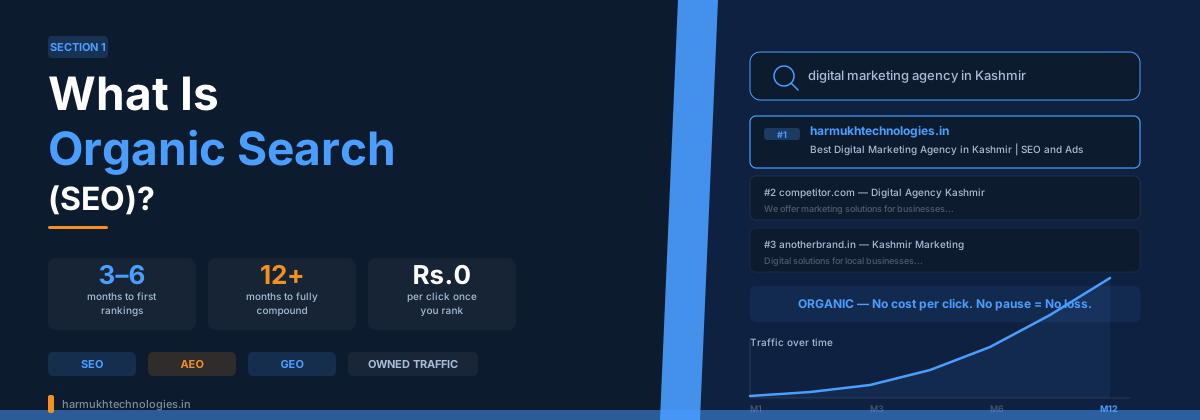
SEO is owned traffic. Once you rank, you don’t pay for every visitor. The compounding effect makes it one of the highest-ROI investments in digital marketing — but only if you start early enough.
Organic search is the traffic your website earns without paying per click. When someone types “digital marketing agency in Kashmir” into Google and your page appears in the results — not because you paid for that position, but because Google’s algorithm decided you deserved it — that’s organic.
Getting there requires Search Engine Optimisation (SEO): the work of making your website technically sound, your content genuinely useful, and your authority measurable through backlinks and consistent publishing. At Harmukh Technologies, we layer this with AEO (Answer Engine Optimisation) and GEO (Generative Engine Optimisation) so your brand gets cited not just by Google, but by ChatGPT, Gemini, and Perplexity too.
The caveat that most agencies hide: SEO takes time. Meaningful organic rankings for competitive keywords typically take three to six months to appear, and 12+ months to fully compound. That’s not a failure of the strategy — it’s the nature of an asset you’re building to own, not rent.
2. What Is Paid Search (Google Ads)?
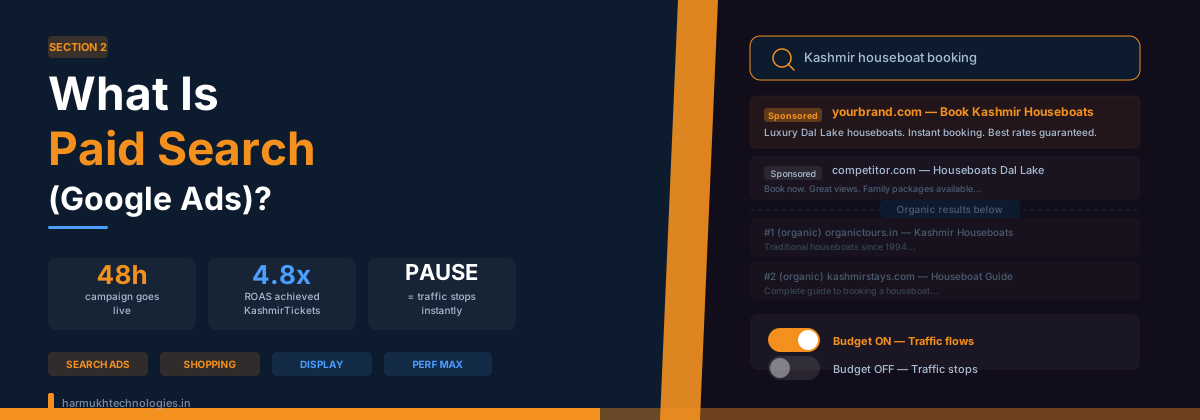
Paid ads appear at the top labelled “Sponsored.” Organic results appear below. Both require strategy — they just operate on different timelines and cost models.
Paid search means you pay Google every time someone clicks your ad. Your listing appears at the top of search results — labelled “Sponsored” — for the keywords you bid on. Traffic starts the day your campaign goes live. It also stops the day you pause your budget.
Our Google Ads management service covers Search campaigns (text ads triggered by keywords), Shopping campaigns (for e-commerce), Display campaigns (banner ads across the web), and Performance Max (AI-driven cross-channel campaigns). Every campaign we build ships with GTM conversion tracking and bid strategy logic tied to your actual revenue goals — not just click volume.
3. Organic vs Paid: The Key Differences
Here’s how the two channels compare across the metrics that actually matter to a business owner making a budget decision:
| Factor | SEO (Organic) | Google Ads (Paid) |
|---|---|---|
| ⏱️ Time to Results | 3–12 months | Days to weeks |
| 💸 Cost Model | Time, content & technical investment | Pay per click (ongoing spend) |
| 📈 Sustainability | Compounds — traffic grows over time | Stops when budget stops |
| 🎯 Targeting | Search intent + topical authority | Keywords, location, audience, device |
| 🤝 User Trust | Higher — organic results feel earned | Lower — labelled as “Sponsored” |
| 📊 Data Speed | Slow to accumulate | Fast — conversion data in days |
| 🔧 Control | Indirect — algorithm-driven | Direct — you control bids & targeting |
| 🏆 Best For | Long-term authority & traffic | Immediate leads, launches, offers |
| 🔄 Click-Through Rate | Higher for informational queries | Higher for transactional queries |
| 🛡️ Ownership | Owned asset — rankings persist | Rented — pausing = zero traffic |
“The real question isn’t organic vs paid. It’s: what does your business need in the next 90 days vs the next 24 months?”
4. When to Invest in SEO
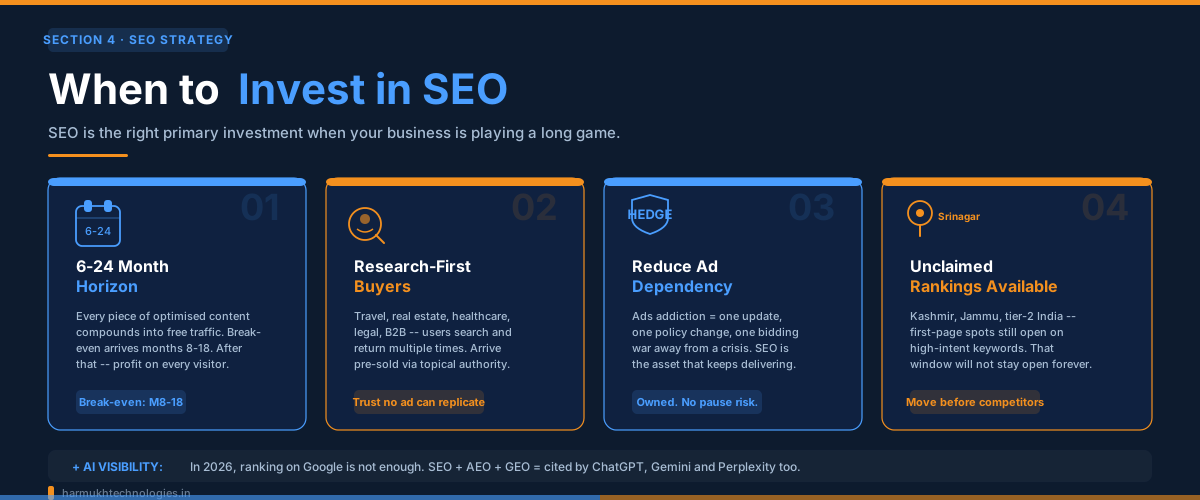
SEO traffic compounds over time. Paid traffic stays flat relative to budget. The crossover point where organic ROI exceeds paid typically arrives between months 8 and 18.
SEO is the right primary investment when your business is playing a long game — and almost every business that wants to survive more than two years should be playing a long game.
You have a 6–24 month horizon
If your business will still be operating next year, every piece of well-optimised content you publish today compounds into traffic without further spend. The break-even point on SEO investment — where cumulative organic traffic value exceeds the cost of building it — typically arrives between months 8 and 18, depending on the niche and competition level. After that, you’re in profit on every visitor forever.
Your customers research before buying
For high-consideration purchases — travel, real estate, healthcare, legal services, B2B software — users search, compare, read, and return multiple times before converting. An organic presence across that research journey builds trust that no ad can replicate. If someone reads three of your blog posts before booking a consultation, they arrive pre-sold. That’s what a topical authority content strategy does.
You want to reduce ad dependency
One of the most expensive traps in digital marketing is becoming addicted to paid traffic. Businesses that rely entirely on Google Ads are one algorithm update, one policy change, or one competitor bidding war away from a traffic crisis. SEO is the hedge — the owned asset that keeps delivering even when you pause your campaigns.
You’re in a niche with unclaimed rankings
Most local and regional markets — including many categories across Kashmir, Jammu, and tier-2 cities across India — still have first-page rankings up for grabs on high-intent keywords. A competitor in Mumbai or Delhi who built topical authority three years ago would be almost impossible to displace. In Srinagar, many categories are still open. That window doesn’t stay open forever.
You want AI visibility (AEO + GEO)
In 2026, ranking on Google is not enough. When users ask ChatGPT, Gemini, or Perplexity for a recommendation, the brands that appear are the ones with documented topical authority — multiple pieces of structured, E-E-A-T-compliant content that AI models can cite confidently. Our SEO, AEO & GEO service builds this into the strategy from day one.
5. When to Run Google Ads
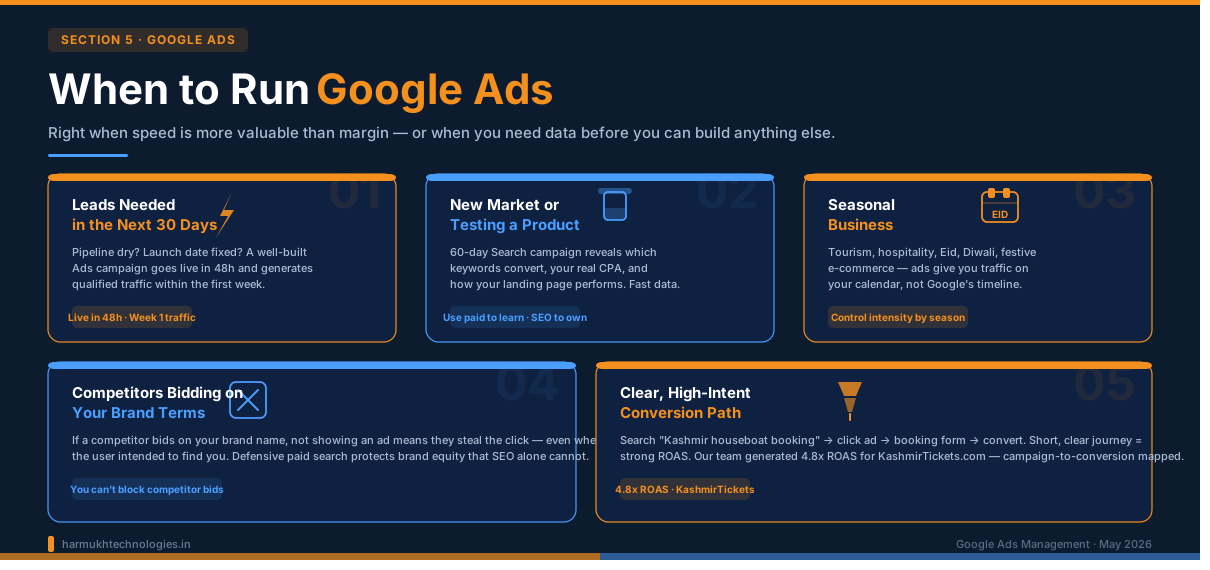
Google Ads is the right primary investment when speed is more valuable than margin, or when you need data before you can build anything else.
You need leads in the next 30 days
If your pipeline is dry, your launch date is fixed, or you’re running a time-limited offer, waiting six months for SEO to kick in is not a strategy. A well-built Google Ads campaign can be live within 48 hours and generating qualified traffic within the first week. That speed has real value for businesses at certain stages.
You’re entering a new market or testing a product
Ads are the fastest market research tool available. Running a Search campaign for 60 days tells you which keywords actually convert, what your real cost per acquisition is, and how your landing page performs against intent. That data is not available from SEO for months. Use paid to learn fast, then use SEO to own the territory you validated.
You operate in a seasonal business
Tourism operators in Kashmir, hospitality businesses around Eid or Diwali, or e-commerce brands around festive seasons need traffic spikes aligned with a calendar — not whenever Google’s algorithm decides they’ve earned it. Ads let you control exactly when you appear and at what intensity. Paired with SEO built during the off-season, seasonal businesses get the best of both.
Your competitors are running ads on your brand terms
If a competitor is bidding on searches for your brand name or your core category, not showing an ad means they get the click even when the user intended to find you. Defensive paid search campaigns protect your brand equity — something SEO alone cannot do because you can’t stop a competitor from bidding on your terms.
You have a clear, high-intent conversion path
Google Ads works best when the journey from click to conversion is short and clear: someone searches “Kashmir houseboat booking,” clicks your ad, lands on a page with a booking form, and converts. The higher the intent of the keyword and the cleaner the landing page, the better your ROAS. Our team generated a 4.8× ROAS for KashmirTickets.com by mapping campaign structure directly to conversion paths — not just keywords.
6. Scenario Matrix: Which Channel for Your Situation?
Every business is different. Here’s a quick-reference matrix for common scenarios — based on what we actually see when a new client books a consultation.
| Business Situation | Recommended Channel | Why |
|---|---|---|
| New business, zero traffic, tight timeline | Google Ads First | Need leads now; use ads to fund SEO investment |
| Established business, no organic presence | Both — SEO Priority | Run ads while SEO builds; shift budget over 12–18 months |
| Seasonal business (tourism, hospitality, events) | Both — Timed | Build SEO in off-season; heavy ads during peak months |
| High-ticket B2B / long sales cycle | SEO Priority | Research-heavy buyers; trust built through content, not ads |
| E-commerce with clear product demand | Both | Shopping ads for immediate sales; SEO for category pages |
| Local service business (doctor, lawyer, contractor) | Both — Local Focus | Local SEO + Google Business Profile + Local Search Ads |
| Product launch with fixed date | Google Ads First | SEO can’t hit a deadline; ads can |
| Content-driven SaaS or service business | SEO Priority | Topical authority drives inbound; lower CAC over time |
| Bleed from ads with low ROAS | Pause Ads, Fix SEO | Ads amplify a broken funnel; fix conversion path first |
7. The Combined Strategy: Why Most Businesses Need Both
The most effective digital marketing strategies don’t choose between organic and paid — they use each channel for what it does best and let them reinforce each other.
SEO Does This
- Builds topical authority over time
- Earns trust for research-phase queries
- Reduces cost-per-lead over 12–24 months
- Protects against ad cost inflation
- Gets cited by AI tools (ChatGPT, Gemini)
- Works 24/7 without daily budget management
Google Ads Does This
- Delivers qualified traffic immediately
- Generates conversion data fast
- Targets high-intent buyers at decision moment
- Provides budget control and forecasting
- Dominates seasonal demand peaks
- Protects brand from competitor bidding
The practical playbook we use at Harmukh Technologies: run Google Ads to generate revenue in the short term while the SEO foundation is being built. As organic rankings mature and start generating leads on their own, reduce ad spend on keywords where you’re already ranking organically — and redirect that budget toward new markets, new products, or higher-competition terms that SEO hasn’t cracked yet.
This is exactly what we did for KashmirTickets.com: ads generated ₹1.5 crore in Year 1 while SEO built 45,000 monthly organic visitors. By the end of Year 1, a significant portion of ad spend that was going to owned keyword territory was freed up — either reduced to pure profit or reinvested in expansion.
8. How the FAN Methodology Connects SEO and Ads
At Harmukh, we don’t run SEO and Google Ads as separate silos. The same intelligence that informs our content clusters informs our campaign architecture and that’s by design.
Our FAN Methodology — Fan-Out Mapping, Authority-Signal Alignment, and Node Architecture — was built for our content marketing and SEO work, but the strategic thinking flows directly into paid.
🔗 How FAN Thinking Applies to Both Channels
This integrated approach is why our clients — particularly in competitive spaces like travel, healthcare, and real estate see compound returns instead of diminishing ones. The channels don’t compete for budget. They share intelligence.
9. How to Split Your Budget Between SEO and Google Ads
There’s no universal formula, but there is a framework. The right split depends on three things: your business stage, your revenue timeline, and your category competitiveness.
| Business Stage | Google Ads % | SEO % | Logic |
|---|---|---|---|
| 0–6 months (launch) | 70–80% | 20–30% | Revenue needed now; build SEO foundations in parallel |
| 6–18 months (growth) | 50–60% | 40–50% | SEO gaining traction; shift budget as organic keywords start ranking |
| 18–36 months (maturity) | 30–40% | 60–70% | Organic is delivering; ads focus on competitive gaps and expansion |
| 36+ months (authority) | 20–30% | 70–80% | Strong organic base; ads reserved for high-value terms and seasonality |
These are directional, not prescriptive. A healthcare clinic with a ₹50,000/month budget and a 6-month old website needs different advice than a 5-year-old e-commerce brand with ₹5L/month. That’s exactly the kind of channel-specific strategy we build in a free consultation.
One thing we always say: if you can only afford one channel right now, the choice depends on your runway. Short runway → ads first. Long runway → SEO is the more efficient compounding investment. But if your runway is short and you’re relying 100% on ads with no SEO plan, you’re building on rented ground forever — and that’s the most expensive strategy of all.
10. The Bottom Line
Run Google Ads when you need leads now, when you’re launching something, or when you need market data fast.
Invest in SEO when you’re thinking 6–24 months ahead, when you want to own your traffic instead of renting it, and when you want to compound your returns over time.
Do both if you’re serious about building a business — not just a campaign.
The businesses that win in digital marketing are not the ones who picked the right channel. They’re the ones who used the right channel at the right time and connected them into a single, unified strategy.
If you want to understand the deeper comparison between PPC and SEO models, that guide goes into more technical detail on cost structures and ROAS modelling. If you want to understand how paid advertising decisions differ across platforms, our post on Meta Ads vs Google Ads covers the intent and audience targeting distinctions that determine which platform deserves your paid budget.
And if you want to understand how SEO is evolving beyond Google — into AI answer engines — our guide on SEO vs AEO explains why the organic strategy of 2024 is not the same as the one that wins in 2026.
Not Sure Which Channel is Right for Your Business?
We’ll look at your current digital footprint, your category, your timeline and your budget — and tell you exactly what we’d do and why. No templates. No guesswork.

[…] want to understand how GEO relates to the broader evolution of search, our guides on SEO vs AEO and organic vs paid search strategy cover the adjacent decisions every business needs to make alongside their GEO investment. And if […]